


The idea: a museum costume, life-size and in your hands
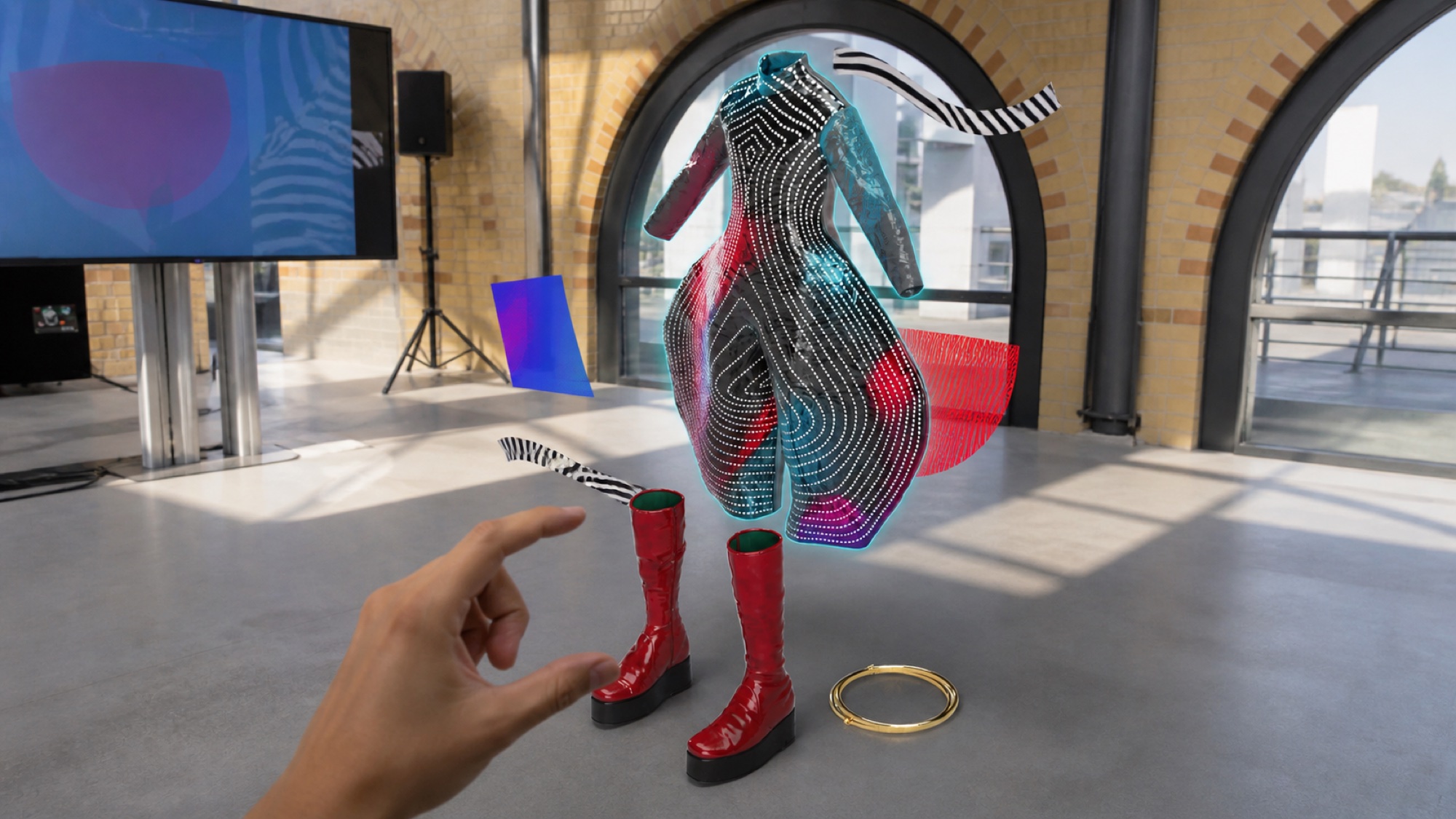
Bowie’s stage costumes are locked behind museum glass. You can look, but never get closer than the barrier allows. The installation flipped that: a faithful 3D reconstruction of the costume floats on the exhibition floor at full scale, and visitors grab it, turn it and move it through the space with nothing but their hands. The costume design itself stays untouched; what changes is how close you can get to it.
Spatial design: the floor plan as the wireframe
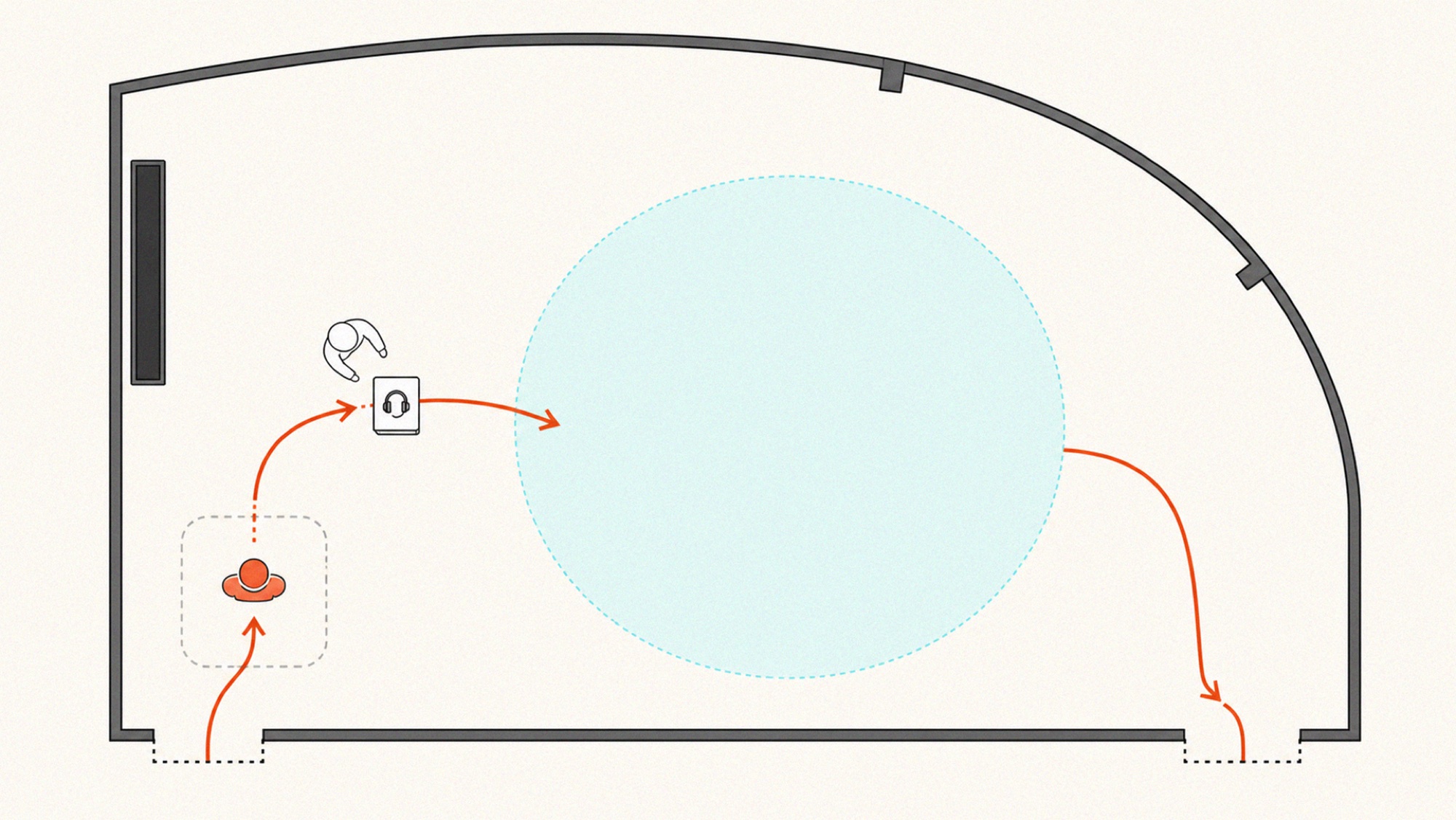
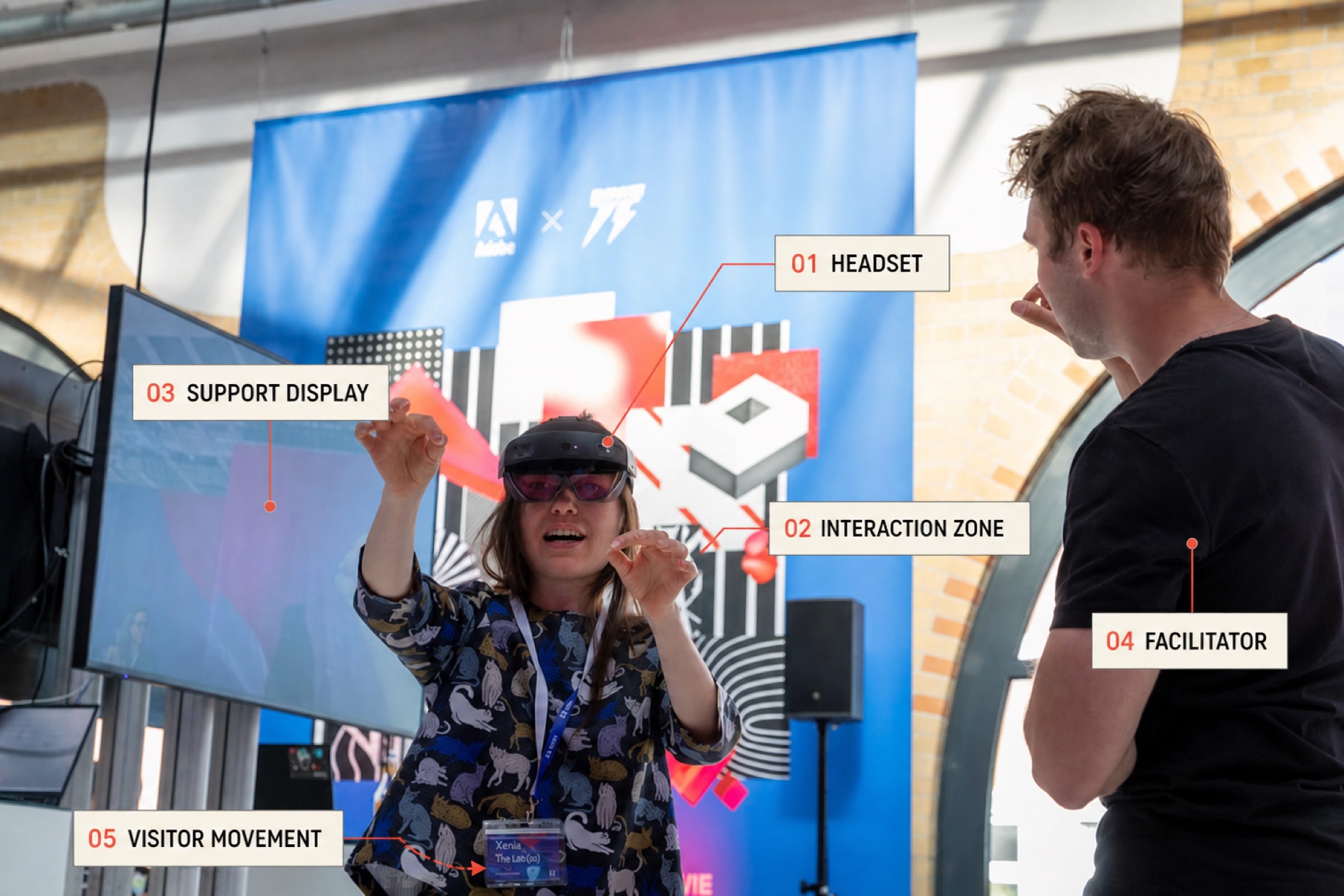
In AR the floor plan is the wireframe. The experience ran twice on the exhibition floor, so we mapped both areas before designing a single interaction: where a visitor enters, where the hologram anchors, how close people can get before the illusion breaks, and where a facilitator stands without stealing the moment. A support display mirrors the headset view so waiting visitors become an audience instead of a queue.
Interaction: self-explaining in the first thirty seconds
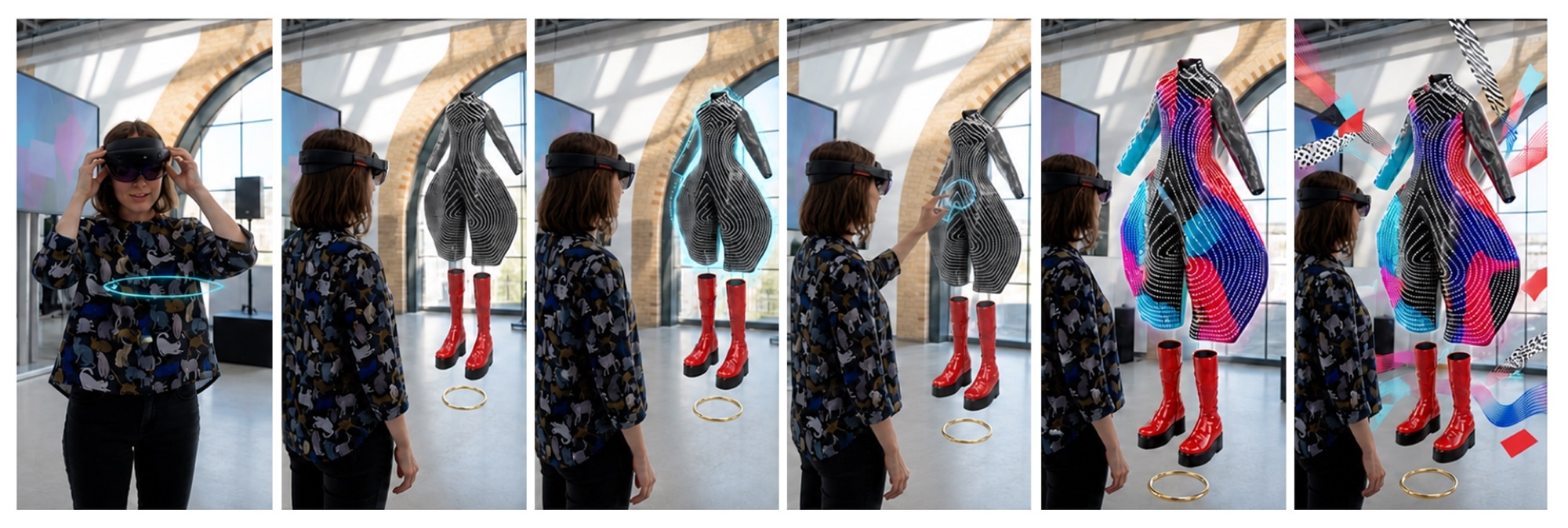
Most visitors had never worn a HoloLens. The interaction had to teach itself in the first half minute: the costume appears, a soft outline invites a closer look, a glowing ring marks where a pinch will land. Pinch, and the costume follows your hand. Every step gives a reward before asking for the next gesture.
The costume: a 3D asset that holds up at arm’s length
The costume was rebuilt as a proper 3D asset, modelled, surfaced and lit so it reads as vinyl and lacquer, not as a game prop. Visitors could bring it right up to their eyes, so seams, surfaces and reflections had to survive close inspection while the fit and drape stayed true to the original.
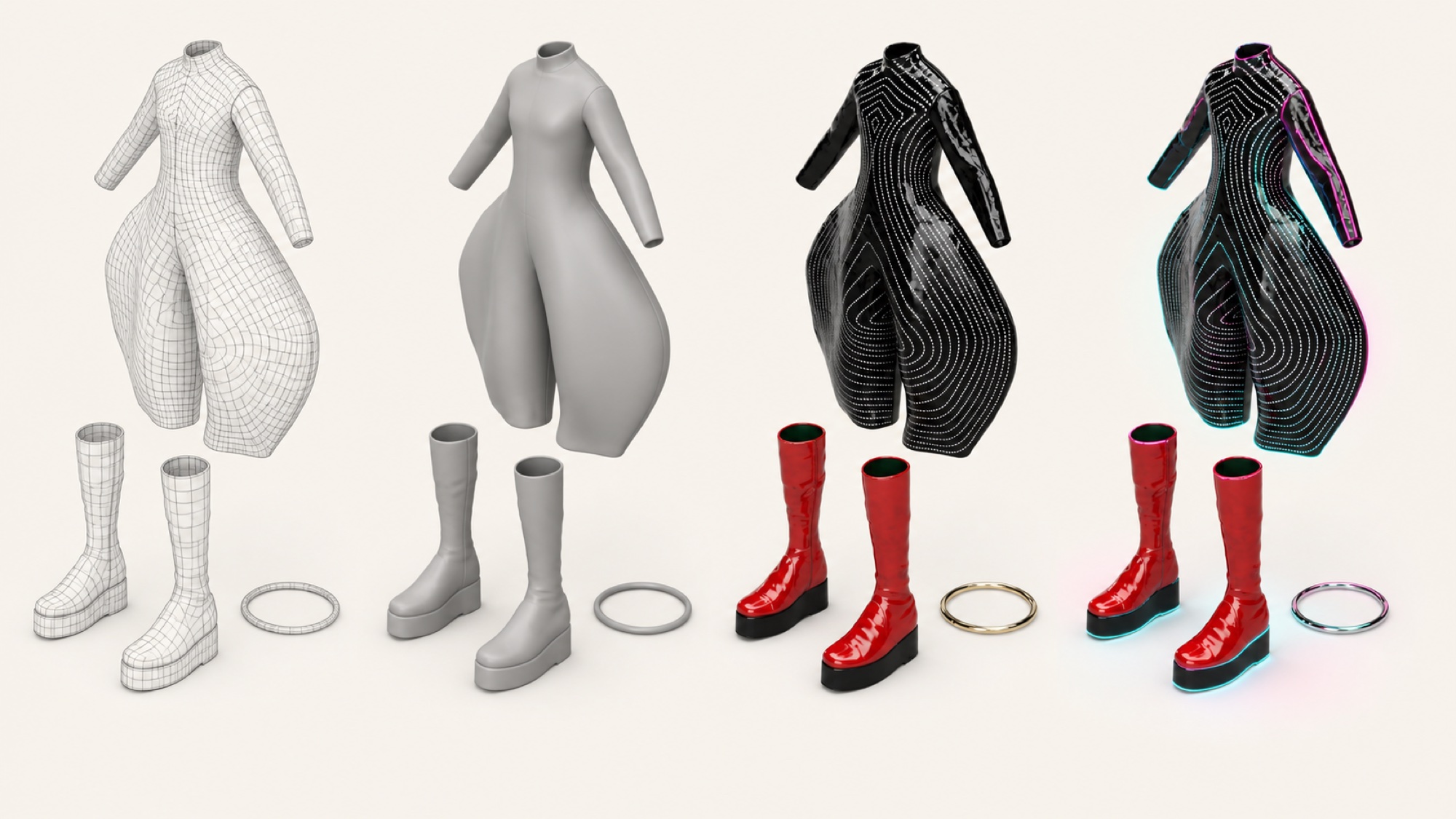
The best compliment on site: visitors reaching out to feel a fabric that wasn’t there.
Learnings: onboarding in space, designing for spectators, forgiving gestures
- Onboard in the world, not in a menu. Every instruction that could be an object in space (a glow, a ring, an outline) worked better than any text panel.
- Design for the people not wearing the headset. The support display turned a solo gadget demo into a shared moment; spectators queued to try what they had just watched.
- Forgive imprecise gestures. Generous hit targets and a facilitator’s single calibration sentence (“pinch like you’re picking a grape”) cut failed interactions dramatically.